
Paid search isn’t the only way to reach buyers ready to act. Strong alternatives to paid search advertising include SEO, social media ads, email marketing, video, and display campaigns; for B2B, the best fit depends on your audience, buying stage, targeting needs, and goals. Compare each channel by its costs, the people it can reach, and how clearly you can measure results.
It makes sense to explore alternatives to paid search advertising when you want to diversify visibility or reach prospects before they actively search. This guide compares the main options, explains what each is suited to, and offers a practical way to choose channels for a focused test. Not every platform fits every business, so the goal is to identify what best supports your audience and objectives.
Key Takeaways
- Compare channels by audience fit, buying intent, targeting options, and how clearly results can be measured, not by reach alone.
- Test one or two alternatives for 60 to 90 days while continuing to optimize your existing channels.
- Choose a channel based on the job you need it to do, such as building awareness, capturing demand, or nurturing prospects.
- Look beyond cost per click: assess whether a channel can generate the outcomes your advertising goals require.
- Use SEO, social media, video, and other search options as distinct ways to reach potential buyers, rather than assuming one channel suits every audience.
1. Comparing advertising costs, audiences, and targeting
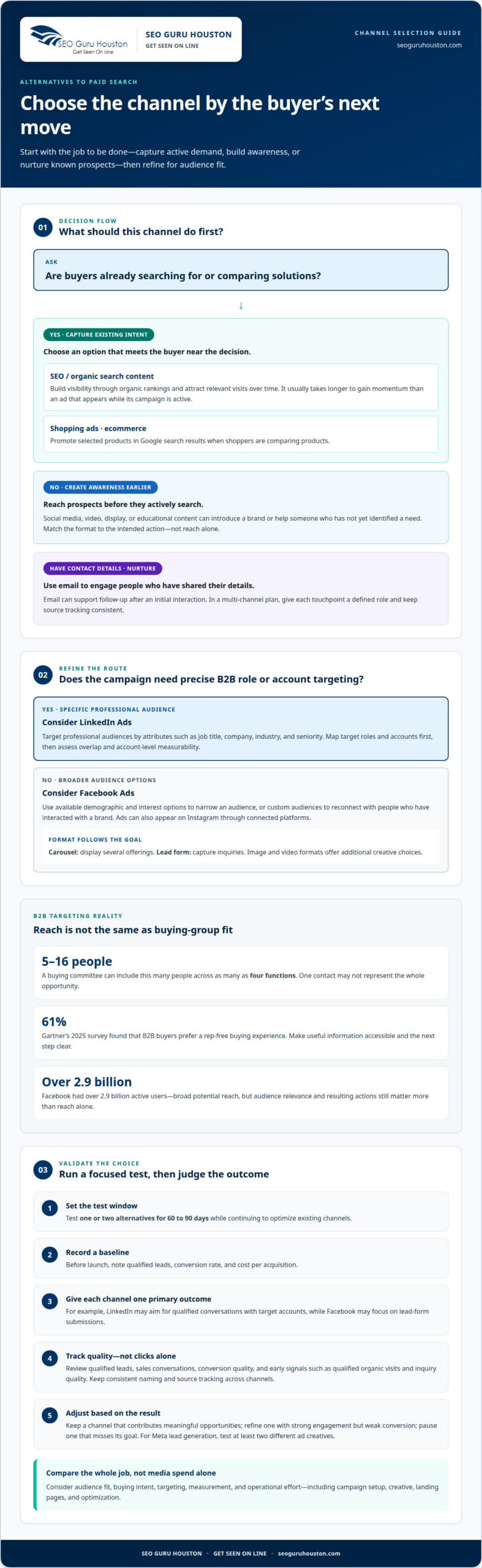
Compare channels by audience fit, buying intent, targeting, measurement, and operational effort. Google Ads reaches people actively searching, while social platforms can introduce a brand earlier in the buying process. Include campaign setup, creative, landing pages, and optimization in your comparison, not just media spend. These alternatives serve different goals, so they are not direct substitutes for every search campaign.
SEO builds visibility through organic search rankings rather than paying for each ad click. It can attract relevant traffic over time, but usually takes longer to gain momentum. A paid search ad can appear while its campaign is active. Choose based on whether you prioritize immediate visibility or a longer-term source of organic visits.
Social media, email, and referral programs reach people in different ways. Facebook can introduce offers to a broad audience, email can engage people who have shared their details, and referrals can bring prospects through existing relationships. Compare these options by audience relevance and resulting actions, not reach alone. A referral, for example, may generate fewer visits but stronger inquiries from people who already trust the source.
Facebook had over 2.9 billion active users, giving advertisers broad potential reach. Facebook Ads can narrow audiences using available demographic and interest options, while custom audiences can reconnect with people who have interacted with a brand. Ads can also appear on Instagram through connected platforms. Image, video, carousel, and lead-generation formats suit different goals: a carousel can display several offerings, while a lead form can capture inquiries.
For B2B campaigns, audience size matters less than overlap with target accounts, buying-stage fit, and account-level measurability. Buying committees can include five to 16 people across as many as four functions, so one contact may not represent an entire opportunity. Map target roles and accounts before comparing channels. Gartner’s 2025 survey found that 61% of B2B buyers prefer a rep-free buying experience, making accessible information and clear next steps important.
LinkedIn Ads can target professional audiences by attributes such as job title, company, industry, and seniority. This can suit campaigns aimed at specific business roles or organizations. Compare LinkedIn’s professional targeting with Facebook’s broader audience options, then choose based on the buyers you need to reach, not platform reach alone.
Use a comparison sheet to record each channel’s audience, targeting controls, cost drivers, intended action, and measurement method. For example, compare SEO content with a LinkedIn campaign by search intent, account fit, production workload, and qualified inquiries. This gives you a practical basis for selecting channels to test.
2. Testing alternative channels over 90 days
A structured test helps distinguish a promising channel from a temporary spike. Test one or two alternatives for 60 to 90 days while continuing to optimize existing channels, such as Google Ads. Before launch, record the current baseline for qualified leads, conversion rate, and cost per acquisition. Then define one primary outcome for each test. For example, a LinkedIn campaign might aim to generate qualified conversations with target accounts, while Facebook Ads might focus on lead-form submissions.
Unpaid channels such as SEO can generate leads as useful pages gain visibility and attract relevant visitors, but there’s no fixed time to results. The pace depends on factors such as competition, site condition, content relevance, and how closely the offer matches search intent. During a 90-day channel test, measure early signals, such as qualified organic visits and inquiry quality, alongside completed leads.
Choose a channel mix by matching each platform to a stage of the buyer journey. Someone who has not identified a need may respond to educational content or display ads. A prospect comparing solutions may engage with a detailed landing page, while a ready buyer may prefer a direct offer. Map each campaign to the action it supports and make the next step clear. For instance, a LinkedIn awareness ad can lead to a useful resource rather than an immediate sales request.
Multi-channel lead generation works when every touchpoint has a defined role. A Facebook Ads campaign can introduce a message, email can nurture people who opt in, and a landing page can explain the offer and capture an inquiry. Use consistent naming and tracking across channels to connect leads with their original source. Otherwise, activity across platforms can look busy without showing which interactions influenced qualified opportunities.
Build the test in stages. First, document the audience, offer, conversion action, and measurement method for each channel. Then launch with a consistent landing-page experience and tracking. During the test, review lead quality and delivery regularly, adjusting one major variable at a time. For Meta lead generation, test at least two different ad creatives. This helps show whether the message or format affects response without changing the audience and offer simultaneously.
At the end of the test window, compare outcomes against the baseline and each channel’s intended job. Look at qualified leads, sales conversations, and conversion quality, not clicks alone. Keep a channel that contributes meaningful opportunities, refine one with strong engagement but weak conversion, and pause one that misses its goal. A well-built demand-generation plan can connect these tests to a measurable pipeline strategy.
3. Choosing a replacement based on the advertising job
Start with the objective, not the platform. If you want to reach people already comparing products, organic search content or shopping ads can meet them near that decision. Google Shopping Ads let ecommerce businesses promote selected products in Google search results. If your goal is awareness, social or video formats can introduce a brand before a prospect searches.
For ecommerce, match the format to the product decision. Google Shopping Ads show selected products in search results, making them relevant when shoppers are comparing items. The product page should carry the same message and make the next step easy. For a service business, an educational landing page may be more useful than a product-style ad because prospects need context before contacting the company.
When you want to bring previous visitors back, Google Display Ads can re-engage people who have visited a website. This can suit prospects considering a service page but not yet taking action. Use a message tied to their earlier interest, such as inviting visitors who read about a service to explore a related case or resource.
Video serves a different purpose. YouTube is the second-largest search engine in the world, and video can explain a complex offer through demonstration, instruction, or customer education. A video ad should deliver its central point quickly and connect to a relevant next step. For example, a B2B brand can introduce a technical solution, then direct interested viewers to a detailed page.
Social platforms can help reach audiences through interests, professional roles, or prior engagement. Facebook Ads can introduce an offer with a visual or lead-generation format, while LinkedIn Ads can focus on professional audiences and business roles. Choose the platform where your intended buyers are reachable, then select a format that supports the action you want.
Email is not a discovery channel for strangers, but it can nurture people who have opted in. Use it to explain an offer over several interactions, share useful resources, or bring an existing prospect back to a decision. A welcome sequence, for example, can introduce a brand, address common concerns, and guide readers to a relevant page.
Before choosing an alternative, write one sentence naming the audience, the problem, and the action you want. Then select the platform and format that make that action natural. A sponsored social post may earn attention, while a search result may capture active demand. Treat each as a distinct marketing tool and judge it by how well it performs its assigned job.
4. Cost efficiency and cost per click
Cost per click (CPC) measures how much a campaign spends to generate each ad click. Calculate it by dividing advertising spend by clicks, then compare the result with qualified leads and sales. A low CPC can still waste budget if visitors leave without taking action. A higher CPC may be efficient when relevant prospects become valuable customers.
Organic SEO has no standard price for small businesses in the United States. Costs depend on the site’s condition, competition, content needs, technical work, and whether tasks are handled in-house or outsourced. Organic clicks do not carry a per-click media charge, but creating and maintaining useful pages still takes resources.
Compare campaigns using the same outcome. For example, calculate cost per qualified lead by dividing campaign spend by qualified leads, not all form submissions. Add creative production, landing pages, and campaign management to media spend. This fuller view helps compare Microsoft Advertising with a social campaign, even when their CPCs differ.
Microsoft Advertising can reach searchers through its advertising platform, while social channels can target audiences using available demographics and interests. Compare how relevant each audience is to your offer, not just the number of clicks. A lower CPC will not make a campaign efficient if it reaches people outside your target market. Track qualified inquiries by channel to see where the audience is a better fit.
For display campaigns, assess the objective. Google Display Ads can re-engage previous website visitors, so evaluate return visits and subsequent conversions alongside clicks. A display campaign that brings back interested prospects may support a later sale, even if it does not generate an immediate inquiry. Use a consistent attribution approach when comparing its contribution with search or email.
Use a short comparison sheet for each channel:
- Spend: Include media, creative, landing-page, and management resources.
- Response: Record clicks, inquiries, and qualified leads separately.
- Efficiency: Calculate cost per qualified lead and compare conversion quality.
- Audience: Note whether targeting reached relevant demographics or accounts.
Review campaigns against their assigned goals. Judge a lead-generation campaign by qualified opportunities, while an awareness effort needs measures tied to attention and later action. Do not shift budget based on CPC alone. If Microsoft Advertising delivers fewer but more relevant leads than another channel, its higher click cost may still support stronger business results. Keep the comparison consistent and use the numbers to guide your next adjustment.
5. Search advertising alternatives
The best alternatives to paid search advertising depend on the task: SEO and content marketing can build organic search traffic, while social media, email, referrals, and video reach people through other routes. Businesses that still want search ads can also compare Microsoft Advertising with Google Ads. These channels differ in audience intent, creative needs, and how quickly they can reach potential customers, so choose according to the result you need.
To attract organic search traffic, publish useful pages that answer specific customer questions. A home services company, for example, could create a page for each service and a guide to help customers choose between solutions. Use clear titles, relevant terms, and internal links so visitors and search engines can understand each page. Refresh pages when services change, and make the next step clear.
Local businesses can use Google Business Profile alongside local SEO. Keep business details, services, and hours accurate, then create website pages for the services and locations customers search for. For example, a plumber can explain service coverage, describe common repairs, and provide a simple way to inquire. Accurate information helps nearby prospects understand whether the business meets their needs.
Organic marketing has limits. SEO requires sustained work, and rankings and traffic can change as competitors improve their content or search engines adjust results. Social posts and email also rely on audience attention and consistent publishing. Unlike paid search, organic channels do not offer the same direct control over immediate visibility or click volume. Account for these differences when deciding how much demand each channel needs to support.
Reduce reliance on paid search with a practical sequence. First, identify the search terms and landing pages that currently drive qualified leads. Next, create useful organic pages that answer the customer questions behind those searches. Share the resources through social channels, then use email to nurture opted-in contacts. Review lead sources regularly to see whether organic visits, referrals, or returning prospects contribute to inquiries.
Native advertising places sponsored content in a platform’s feed, while display ads can re-engage previous website visitors. These formats can support discovery or consideration, but they differ from search ads: people may see them without actively seeking a solution. Set a clear goal, such as resource visits or qualified inquiries, and assess the campaign against that goal rather than clicks alone.
YouTube is the second-largest search engine in the world, making it another option for discovery through video. A short explainer can answer a customer question, demonstrate a process, or introduce a service before a prospect visits your website. Connect the video’s message to a useful landing page, then assess whether viewers take the intended next step.
A mix of alternatives to paid search advertising can reduce dependence on one source of traffic. Combine content for organic discovery, local SEO for nearby searches, and social or email for continued engagement. For a more coordinated inbound marketing strategy, connect these channels to useful pages and clear conversion actions.
SEO Guru Houston
SEO Guru Houston helps businesses assess which channels fit their audiences, goals, and lead-generation needs. Turn to the team when you’re weighing organic visibility against paid search or need a more connected approach across channels. Houston SEO Services can support organic search visibility, while Houston PPC Services can complement that strategy when paid campaigns still serve a clear purpose. For companies selling to business buyers, Houston B2B Marketing and Houston Inbound Marketing can help align audience needs with relevant content and lead-generation activity.
The next step is to clarify which customers you want to reach, what actions you want them to take, and how you will measure progress. Contact SEO Guru Houston to discuss an approach that fits your advertising goals.
Turn your next channel test into a growth plan
Choosing alternatives to paid search advertising is a strategic decision, not a reason to abandon paid campaigns altogether. Let your next move be guided by a clear business priority: stronger organic visibility, more qualified B2B leads, or a better balance between immediate reach and long-term demand. Then build a channel plan around that priority and measure progress against meaningful outcomes.
SEO Guru Houston offers Houston SEO Services, Houston PPC Services, and Houston B2B Marketing to help businesses align search visibility and lead generation with their goals. If you’re ready to shape a more focused digital marketing approach, contact SEO Guru Houston to discuss your next step.
Make your next test count. A focused plan can turn channel choices into deliberate progress.
Frequently Asked Questions
What’s the Best Google Ads Alternative for B2B Companies?
For B2B companies, LinkedIn Ads can be a strong alternative when reaching specific professional roles or organizations matters most. Pair campaigns with useful content that helps buyers understand a complex solution, such as a technical guide or comparison page. SEO can support discovery over time, while LinkedIn can focus paid visibility on business audiences. Choose based on whether the priority is account reach, early education, or capturing existing demand.
How can I advertise without Google?
You can advertise without Google by using Microsoft Advertising, LinkedIn Ads, Facebook Ads, or video and display campaigns. The best choice depends on where your intended audience spends time and what action you want them to take. For example, a B2B firm can use LinkedIn to reach professional audiences, while a local service business can pair social campaigns with helpful website content. Track inquiries by source to understand which channels contribute.
Why Choose a Different Strategy Over Google Search Ads?
A different strategy can help a business reach people before they search, diversify lead sources, or focus on audiences that search ads do not target as precisely. Educational content, for example, can explain a specialized service, while social campaigns can introduce it to new prospects. Search ads may still suit active demand. The aim is not to replace a channel automatically, but to address gaps in audience reach and buyer engagement.
How can a business choose the right marketing channel based on budget and goals?
Start by naming the business outcome, such as inquiries, product sales, or brand awareness, then compare channels by the resources and time they require. A company with limited creative capacity might prioritize useful website pages before producing several video formats. A business seeking faster visibility may consider paid campaigns alongside longer-term organic work. Set a clear measurement method before launch, then assess lead quality and progress against the goal, not clicks alone.

